San Francisco · 20 April 1970 · unsolved

He wrote "My name is" and then thirteen symbols.

Fifty-six years later the name is still open. This page shows what the symbols actually constrain, every approach thrown at them, the most probable reading and why it can't be proven, and a tool to try a name yourself.

Most probable reading
Alfred E. Neuman
  • Closest fit ever published: thirteen letters, three of four rules, one symbol off, and no other published reading within one symbol.
  • His initials open the cipher: the first three symbols are literally A, E, N.
  • In character: he refused his name in writing, borrowed from comics and operetta, botched single symbols before, and kept score against the police.

Best-supported is not proven. The case · the arithmetic

1 = 123 = 115 = 7 = 98 = 13freesame colour = must be the same letter
Behind the text: one point for each of the 26,472 US name forms that satisfy the cipher; the orbiting ring is the cipher with its four rules drawn as links.
13symbols, 8 distinct
4rules they impose, nothing more
26,472US name forms that pass
1 in 700,000chance a random string passes
88.7Mdeath records checked
0that can be proven
The most probable reading

Alfred E. Neuman, the case in one screen
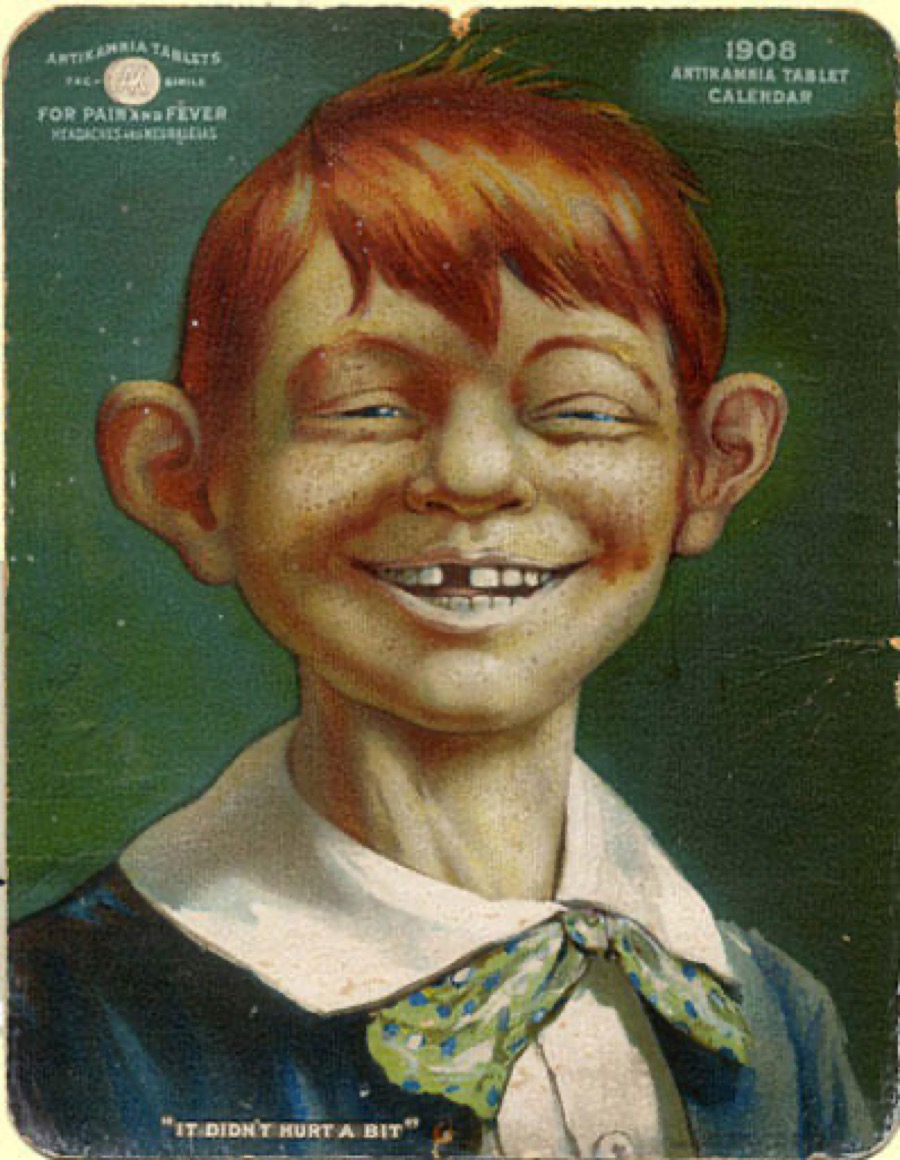
1908 Antikamnia tablet calendar showing the grinning, gap-toothed boy later adopted by Mad magazine as Alfred E. Neuman
The face before Mad: a 1908 pain-tablet calendar. The boy ran in American advertising from the 1890s; Mad adopted him in 1954 and named him in 1956. Mad's portrait is copyrighted; this original is public domain.

The name on the thirteen slots

1 = 123 = 115 = 7 = 98 = 13freesame colour = must be the same letter
✓1 = 12: A, A ✓5 = 7 = 9: E, E, E, the three circled symbols ✓8 = 13: N, N ✗3 = 11: F against M. One symbol wrong.

Proposed by Robert Graysmith in 2002, endorsed by cryptologist Craig Bauer in Unsolved! (2017). Thirteen letters exactly; the cipher opens with his initials; the only published reading within one symbol of fitting.

1. He had already refused
"I will not give you my name because you will try to slow down or stop my collecting of slaves."
408 cipher, solved Aug 1969
Eight months later: "My name is". The next move in a game, not a reversal.
2. He built himself from print
"By fire, by gun, by knife, by rope."
Halloween card 1970, lifted from Tim Holt #30, a 1952 comic
Also The Most Dangerous Game, The Mikado, The Exorcist. A magazine mascot is in range.
3. He botched symbols before
"anamal", "forrest", "experence", "sloi down"
408 slips; several more in the 340
A few errors per hundred symbols. One slip in thirteen: roughly one in five. A one-rule miss is what his sloppiness predicts.
4. Mockery was the point
"Me = 37, SFPD = 0."
Letter, 29 Jan 1974
Mad sold two million copies an issue in 1970; its mascot's motto is "What, me worry?" A cartoon idiot's name is the same voice.
His mistakes, documented why "one symbol off" is not a disqualifier
DocumentWhat he got wrongWhy it matters here
408 cipher, 31 July 1969Four symbols used for two different letters each (one symbol serves both T and O, another S and A, another E and S, another A and S). Plaintext spellings "anamal", "forrest", "experence", "sloi down", "paradice", "thae". The final eighteen symbols decode to nothing readable.Symbol-level slips at a rate of about one per hundred, in the cipher he had the most time to prepare.
340 cipher, 8 November 1969The 2020 solvers had to correct several substitution slips ("lots of fan", "e now have" for "I now have"), shift a misaligned block in the second section by one position, and relocate a stranded "LIFE IS" fragment to read the end.Even his most careful cipher needed error correction to be read at all.
"My name is" letter, 20 April 1970"cerous", "wipped out", "meannie", "doo", "teritory", "buss bomb was a dud".The very letter carrying Z13 is written with the same looseness.
Map letter with Z32, 26 June 1970"promiced", "anilating", "School Buss", "untill", "punnished them in an another way".Same hand, same month as the second unsolved cipher.
Other letters, 1969 to 1974"Christmass", "shure", "complane", "saterical comidy", "soloving", "lovly", "cheep", "wont" for "won't", scores that do not add up.Whether affectation or habit, the pattern is consistent: he did not proofread.

The arithmetic: at roughly one slip per hundred symbols, the chance of at least one slip in thirteen is about one in five, and about one in eight at the lower end. A thirteen-symbol cipher with exactly one bad symbol is therefore ordinary for this author, not an anomaly. It cuts both ways: it rescues ALFRED E NEUMAN, and it also means half a million other name forms fit "with one error".

Against it: no letter names Mad, and with thousands of near-fits, choosing the famous one after the fact is a selection effect. The claim is narrow: of all proposed readings, this alone matches his habits, initials, error rate and humour at once. Fifty-five other taunts and gag names were tested; the best fails three rules.


Working hypothesis

He knew exactly what he was doing

He learned from being beatenHis 408-symbol cipher fell in a week to a schoolteacher couple in August 1969. The 340, mailed three months later, added a transposition and held for fifty-one years. He studied why his work failed and fixed it.
Length is what breaks a cipherBy April 1970 he had watched 408 symbols fall and 340 survive. Thirteen cannot fall. "My name is" over a cipher that mathematics protects is not a confession; it is a man enjoying himself in public at no risk.
He is almost certainly deadWitnesses put him at 25 to 45 in 1969, so born roughly 1924 to 1944, which makes him 82 to 102 today. That is why this project searched the public death index, and why its findings can be read calmly: a question being closed, not a hunt.
Exhibits

Two ciphers nobody has broken

Scan of the 13 cipher symbols from the April 20, 1970 letter
Z13 · 20 April 1970
A E N K M N A M

Thirteen symbols, eight distinct, mailed after the words "My name is". In a homophonic cipher the only hard information is that repeated symbols share a letter: 1=12, 3=11, 5=7=9, 8=13. Nothing else is fixed.

Scan of the 32 cipher symbols from the June 26, 1970 letter
Z32 · 26 June 1970
C △ J I ▣ O ꓘ A M ꟻ ▲ Ω O R T G
X F D V ⌇ ▣ H C E L P W △

Sent with a Phillips 66 map, Mt. Diablo circled: "The map coupled with this code will tell you where the bomb is set." Thirty-two symbols, twenty-nine distinct, three repeats: about 12 bits of structure on a 40-plus-bit message, so roughly a billion readings survive.

Interactive

Test a name against the cipher

Thirteen letters. The tool fills the slots, checks the four rules, and lets you toggle the readings a careful adversary might have used.

1 = 123 = 115 = 7 = 98 = 13freesame colour = must be the same letter
Waiting for thirteen letters.
Try published readings:

A random thirteen-letter string passes about once in 700,000 tries; our lists still hold 26,472 US and 15,745 international name forms that pass, because there are hundreds of millions of combinations. Passing is necessary, never sufficient.

Case log

Fourteen ways in, fourteen dead ends

Keys rebuilt, reuse rejectedBoth solved keys reconstructed and applied in 60 reading orders. Gibberish. Fresh keys, too short to learn.
Every name, every readingUS and 17-country name lists, forward and backward, with initials and middle names: 42,000 forms fit. No suspect's name does, under any reading, within one symbol.
Relaxations triedOne error, nulls, separators, rail-fence transposition, one circled glyph different, shared key with Z32: hundreds of thousands of forms, no signal.
Real people found and placed88.7 million death records: 1,283 men of plausible age fit under some reading. Their last residences are on the map. None is distinguishable from chance.
All fourteen hypotheses, method and result table
#HypothesisWhat was doneResultStatus
1Plain homophonic substitution of a nameSSA first names 1890 to 1955, Census surnames, every form, both directions26,472 forms fitopen, underdetermined
2An English phraseTwo and three word phrases, 60,000-word vocabulary8,714 phrases fitopen, underdetermined
3Reuses the Z408 or Z340 keyKeys rebuilt, 60 reading ordersGibberishrejected
4Letters stand for themselves or are shiftedIdentity, Atbash, 25 Caesar shiftsNo name or word fitsrejected
5A known suspect's name33 suspects, 150 variants, with errors and nullsNothing within one symbolrejected
6Z13 and Z32 share a keyFive shared symbols joined against 16,387 Z32 sentences217 meaningless pairsno signal
7One encoding errorOne rule relaxed609,307 forms; ALFRED E NEUMAN the only published reading this closeopen
8Circled symbols are nulls or separators10-letter name; 4+initial+initial+413,298 forms; no suspectopen, very loose
9Transposed before substitutionRail fence, 2 to 5 rails10,508 forms; 41 people; none plausibleno signal
10One circled symbol is a different glyphEach as the odd one; all three different186 men of plausible ageopen, see map
11Foreign-born17-country lists15,745 more forms; one more person, a womanno signal
12Z32 reads "N radians, M inches, direction"142 million sentences generated16,387 fit, both published readings includedopen, underdetermined
13Z32 yields to statisticsAnnealing, 120 restarts, quadgram model120 different "solutions"below unicity distance
14Real people with fitting names, placedDeath files 2013 and 2010, ZIP-coded1,283 people, mappeddone
Interactive map

Where the pattern matches lived, and where he struck

Each pin is a deceased person whose recorded name fits the cipher under some reading, anonymous, placed at last residence (solid) or at the state that issued their Social Security number (hollow). Crosshairs: the four confirmed attacks, numbered by date; the four attributed cases, lettered; and the Mt. Diablo origin he gave for Z32. Scroll to zoom, drag to pan, hover anything, slide the date.

Attack or Z32 origin Bay Area counties
Northern California
scroll to zoom · drag to pan
United States
scroll to zoom · drag to pan
High: male, 23 to 49 in 1969, at most one assumption, last residence in a Bay Area county. Reading right to left or surname first costs nothing; a careful author would do that.
Medium: male, 23 to 49, California link with at most one assumption, or a zero-assumption fit anywhere.
Low: male or unknown-sex name, 18 to 60, at most two assumptions. Women and people outside 18 to 60 are excluded by the witness evidence.
No names on this map. Thousands of names fit a thirteen-symbol pattern. Publishing the people behind the pins would accuse private families of something no fact supports. The best-placed pin tops out near 1 in 500 before any evidence.
By date

Five confirmed. Thirty-seven claimed.

The confirmed count stopped at five in October 1969. His own went 3, 5, 7, 8, 10 in the "My name is" letter, 12 with the map code, 13, "4-TEEN", "17+", and "37" in 1974. Hover a point for the letter.

Claimed in letters Confirmed by police
Every attack and attributed case date, place, victims, counts
#DatePlaceVictimsStatusConfirmed dead afterZodiac's count at the time
Interactive

Z32: sixteen thousand ways to say "radians and inches"

His postscript said the map code "concerns radians and # inches along the radians". 142 million sentences of that shape were generated and filtered against the cipher's three repeats. Every one below is a valid decryption. Both published readings are in the list.

loading…
The science

Why no computer will ever solve these from the text alone

What the symbols fixIn a homophonic cipher each symbol owns one letter. Repeats are the only hard information: four equalities in Z13, three in Z32. Every other inference is a guess on top.
Unicity distance (Shannon, 1949)A unique solution needs ciphertext longer than key entropy over language redundancy. Z13: 37.6 bits ÷ 3.2 → 11 to 12 letters for prose, over 80 for a name. Z32: 136 bits ÷ 3.2 → 40 to 43 letters. Both are below the line.
Observed equals chanceP(random string passes Z13) = (Σf²)³·Σf³ = 1.4 × 10⁻⁶. 110.7 million name combinations → about 150 expected fits; 59 observed. No excess. The cipher isn't selecting names; chance is.
Three confirming experimentsRebuilt keys give nonsense on both ciphers. An annealing solver returns 120 different Z32 readings that all outscore real English. RADIANS fits at all 26 possible positions, INCHES at all 27.
Show the arithmetic formulas, Monte Carlo, what would overturn it

Unicity. U = H(K)/D, D = log₂26 − H(L). A homophonic key with m symbols has H(K) ≤ 4.70 m bits: 37.6 for Z13, 136.3 for Z32. Prose carries 1.3 to 1.5 bits per letter, so D ≈ 3.2 to 3.4: U(Z13) ≈ 11 to 12, U(Z32) ≈ 40 to 43. Letters in American names have unigram entropy 4.23 bits, so for a name D ≤ 0.47 and U(Z13) ≥ 80.

Chance of a fit. Two positions agree with probability Σfᵢ², three with Σfᵢ³. From the name lists, 0.0642 and 0.00518. Z13: three pairs and one triple, P = 0.0642³ × 0.00518 = 1.37 × 10⁻⁶. Z32: three pairs, P = 0.0656³ = 2.8 × 10⁻⁴. A Monte Carlo of two million random name-like strings produced one Z13 fit.

Expected versus observed. 110,689,423 thirteen-letter first+last strings × 1.37 × 10⁻⁶ ≈ 152 expected; 59 observed, fewer because real names repeat letters less freely. An excess would have been the signature of a cipher built around a real name. There is none.

What would overturn this. A name that fits with zero assumptions and is tied to the case by evidence that has nothing to do with the cipher. Then the fit is confirmation, never discovery.

Record linkage, limits, data and sources

Linkage. Every fitting form was matched against the Social Security Death Master File of 31 May 2013 (88.7 million records) on exact surname and first name, with middle initial where required. Last-residence ZIPs joined from the 17 November 2010 edition (32,553 of 33,950 candidate records); coordinates from the Census 2020 ZCTA gazetteer. Tiers combine assumptions, sex of first name from SSA birth records, age in 1969, and geography.

Limits. Deaths after May 2013, unreported deaths and people without a Social Security number are invisible. Nicknames, transliterations and names absent from the lists are missed. Last residence is not 1969 residence; the issuing state is where someone first worked. None of these creates a false positive; all could hide a true one, so the result is a bound, not a verdict.

Data. Transcriptions from the letter scans, cross-checked with David Oranchak's Zodiac Killer Ciphers wiki. Z408 key from the Harden solution; Z340 key by reproducing the 2020 Blake, Van Eycke and Oranchak transposition. First names: SSA 1890 to 1955, Census 1990, a 17-country list (22,202). Surnames: Census 2010 plus the same list (211,789). English quadgrams and Google unigram and bigram counts for scoring.

Sources. C. E. Shannon, "Communication Theory of Secrecy Systems", 1949 · Oranchak, Blake, Van Eycke, Z340 solution, Dec 2020 · C. P. Bauer, Unsolved!, 2017 · F. Foxon, IACR ePrint 2023/982 · Zodiac Killer Ciphers wiki · Cipher Mysteries on the Neuman mismatch · Death Master File, Internet Archive. Every hypothesis is a script that can be rerun from these inputs.

The road from two scanned letters to this page twelve steps
StepQuestionDoneProduced
01What exactly did he write?Both ciphers transcribed from scans, reconciled with the standard transcription, glyphs compared13 and 32 symbols, 8 and 29 distinct
02Do we have his keys?Z408 key from the Harden plaintext; Z340 key by reproducing the 2020 transposition54 and 63 symbol keys
03Did he reuse them?Both keys, 60 reading ordersNo. Fresh keys.
04Which names fit at all?Every name form from US lists, both directions26,472 forms
05Is a suspect in there?33 suspects, 150 variants, letter transformsNone, none within one symbol
06What if he slipped or tricked?One error, nulls, separators, rail fence, odd glyphHundreds of thousands of forms, no suspect
07What if he was foreign-born?17-country lists15,745 more forms
08Were any real people?88.7 million death records scanned1,283 people
09Where did they live?ZIPs from the 2010 file, mapped877 placed by residence
10Who is worth a second look?Adversary-aware tiers2 High, 12 Medium, none above chance
11What does Z32 say?142 million map sentences filtered16,387 valid readings
12Unsolvable by design?Unicity computed, chance rate checked against observed fitsYes. Observed equals expected.